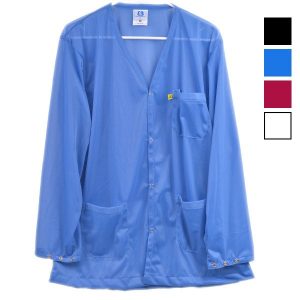
This garment is used as static control apparel under ANSI/ESD S20.20; personnel grounding is verified at the system level in accordance with ANSI/ESD TR53.
Intended for use with approved personnel grounding methods in ESD Protected Areas utilizing ANSI/ESD S4.1–compliant worksurfaces.
Dimension
Specification
Test Method
Composition
88% Polyester 12% Carbon
ASTM D-629
Ounces Per Square Yard
2.2
ASTM D-3776-85
Cuff Snaps
4mm Snaps (1 Socket, 2 Stud Snaps)
–
Surface Resistance
1 x 10⁶-7 Ohms
DIN 54345
Charge Decay
.01 seconds
NFPA-99
Finished Width
60
ASTM D-3774-89
Wales per Inch
36
ASTM D-3887-80
Courses per Inch
55
–
Wash Shrinkage Length
3
AATCC-135-1987
Wash Shrinkage Width
3
(1 (160 degrees) x 10) (Aiix10)
Grab Tensile Length
72
ASTM D-5034
Grab Tensile Width
50
ASTM D-5034
Trap Tensile Length
16
ASTM D-5735
Trap Tensile Width
7.5
ASTM D-5735
Elongation @ Break Length
57
ASTM D-5034
Elongation @ Break Width
127
ASTM D-5034
Stretch Length
7
ASTM D-4964 (5 lbs)
Stretch Width
50
ASTM D-4964 (5 lbs)
Flammability
Pass
16 CFR 1610
Colorfastness
Depending on Shade
AATCC
Machine Wash Warm. Do Not Bleach. Use Only Non-Ionic Detergents and Fabric Softeners. Cool Tumble Dry or Hang. Remove Promptly.
Bleach and surfactants in laundry detergent and fabric softeners can chemically break down the black carbon static shielding fabric woven into ESD smocks and lab coats. Use only liquid non-ionic detergents and fabric softeners that would be appropriate for washing sensitive fabrics like wool.
The surfactants in ionic detergents and fabric softeners usually include anionic (negatively charged) chemicals: alkyl sulfates, alkyl ethoxylate sulfates, and soaps in the ingredient list of your detergent. These can strip the conductive carbon threading of its positive ions leaving it predisposed to carrying negative charges.
You should never use chlorine bleach to wash with these garments. It attacks the carbon bonds (which is useful in removing dyes from white clothes) because bleach will destroy the carbon threading of the garment.
Non-chlorine bleaches are those used in “color-safe” commercial bleaches that are activated by contact with oxygen in the water. These are known as oxidizing bleaches: hydrogen peroxide, sodium percarbonate, and sodium perborate. While not as destructive to the carbon threading as chlorine bleach they are alkalines that can remove carbon with repeated use.